Angelica (Angelica archangelica): Angelica is an herb that has been used in European folk medicine since antiquity. It can be used to treat arthritis. The Western variety of angelica has 12 anti-inflammatory constituents, ten antispasmodic (muscle relaxant) constituents, and five anodyne (pain-relieving) ones. The Chinese sometimes use their native variety of the plant (Angelica sinensis) for the same purpose. The Chinese species is sold in North America under the names dang gui or dong quai.
Dosage and Directions: Place 1 tablespoon of the cut roots of either species of angelica in 1 pint of water and bring to a boil. Cover and boil for two minutes. Remove from heat and let stand, covered, until the water cools to room temperature. Strain and drink the tea in 3 doses during the day for two to three weeks at a time. Then, take a break for seven to ten days and start the treatment again if desired.
Source: http://www.holisticonline.com/Remedies/Arthritis/arth_herbal_medicine.htm#Angelica


Sesame Seeds for Arthritis
Sesame Seeds (Sesamum indicum): A remedy for arthritis from Chinese folk medicine is to eat sesame seeds. One-half ounce of the seeds contains about 4 grams of essential fatty acids, 175 milligrams of calcium, 64 milligrams of magnesium, and, 0.73 milligrams of copper. Increased copper intake may be important during arthritis attacks because the body's requirements go up during inflammation.
Dosage and Directions: Grind up 1/2 ounce of sesame seeds in a coffee grinder and sprinkle on your food at meal- time. You can use this treatment for as long as you like.
Source: http://www.holisticonline.com/Remedies/Arthritis/arth_herbal_medicine.htm#Sesame
Dosage and Directions: Grind up 1/2 ounce of sesame seeds in a coffee grinder and sprinkle on your food at meal- time. You can use this treatment for as long as you like.
Source: http://www.holisticonline.com/Remedies/Arthritis/arth_herbal_medicine.htm#Sesame
Red Pepper, Cayenne Pepper for Arthritis
Red pepper, Cayenne pepper (Capsicum spp.) Red pepper interferes with pain perception. The pain-relieving chemical in red pepper, capsaicin, triggers the body to release endorphins, nature's own opiates. Red pepper also contains aspirin-like compounds known as salicylates.
Compounds in red pepper can also help relieve arthritis when you apply the herb to the skin. Researchers have discovered that you'll get significant pain relief if you apply capsaicin cream directly to painful arthritic joints four times daily. In one study of this treatment, the capsaicin cream reduced RA pain by more than half. Osteoarthritis pain was reduced by about one-third.
Dosage and Directions: Place 1 ounce of cayenne pepper in 1 quart of rubbing alcohol (a poison not for internal use). Let stand for three weeks, shaking the bottle each day. Then, using a cloth, apply to the affected area during acute attacks of pain. Leave the solution in place for ten to twenty minutes, then wipe clean. You can also use an OTC cream that contain capsicum like Zostrix or Capzasin-P.
Source: http://www.holisticonline.com/Remedies/Arthritis/arth_herbal_medicine.htm#pepper
Compounds in red pepper can also help relieve arthritis when you apply the herb to the skin. Researchers have discovered that you'll get significant pain relief if you apply capsaicin cream directly to painful arthritic joints four times daily. In one study of this treatment, the capsaicin cream reduced RA pain by more than half. Osteoarthritis pain was reduced by about one-third.
Dosage and Directions: Place 1 ounce of cayenne pepper in 1 quart of rubbing alcohol (a poison not for internal use). Let stand for three weeks, shaking the bottle each day. Then, using a cloth, apply to the affected area during acute attacks of pain. Leave the solution in place for ten to twenty minutes, then wipe clean. You can also use an OTC cream that contain capsicum like Zostrix or Capzasin-P.
Source: http://www.holisticonline.com/Remedies/Arthritis/arth_herbal_medicine.htm#pepper
Pineapple for Arthritis
Pineapple (Ananas comosus). Bromelain, a chemical in pineapple, helps prevent inflammation. Athletic trainers have been reportedly recommending pineapple to athletes to prevent and treat sports injuries. It is believed to have beneficial effect on arthritis also. Bromelain can help the body get rid of immune antigen complex, compounds that are implicated in some arthritic conditions. It also helps digest fibrin, another compound suspected of being involved in some types of arthritis.
Source: http://www.holisticonline.com/Remedies/Arthritis/arth_herbal_medicine.htm#Pineapple
Source: http://www.holisticonline.com/Remedies/Arthritis/arth_herbal_medicine.htm#Pineapple
Ginger for Arthritis
Ginger (Zingiber officinale) In one study, Indian researchers gave three to seven grams of ginger a day to 18 people with osteoarthritis and 28 with rheumatoid arthritis. More than 75 percent of those participating in the study reported at least some relief from pain and swelling. Even after more than two years of taking these high doses of ginger, none of the people reported side effects. Many people drink ginger tea for osteoarthritis. A ginger compress is also beneficial for arthritis.
Source: http://www.holisticonline.com/Remedies/Arthritis/arth_herbal_medicine.htm#Ginger
Source: http://www.holisticonline.com/Remedies/Arthritis/arth_herbal_medicine.htm#Ginger
Celery for Arthritis
Celery (Apium graveolens): The remedy of eating raw or cooked celery seeds or large amounts of the celery plant to treat rheumatism arrived in North America with the European immigrants. Using celery to treat rheumatism persists today in North American professional herbalism. Various parts of the celery plant contain more than 25 different anti-inflammatory compounds. And, taken as a food, celery is rich in minerals: A cup of celery contains more than 340 milligrams of potassium. (A potassium deficiency may contribute to some symptoms of arthritis.)
Dosage: Place 1 teaspoon of celery seeds in a cup. Fill the cup with boiling water. Cover and let stand for fifteen minutes. Strain and drink. Drink 3 cups a day during an acute arthritis attack.
Source: http://www.holisticonline.com/Remedies/Arthritis/arth_herbal_medicine.htm#Celery
Dosage: Place 1 teaspoon of celery seeds in a cup. Fill the cup with boiling water. Cover and let stand for fifteen minutes. Strain and drink. Drink 3 cups a day during an acute arthritis attack.
Source: http://www.holisticonline.com/Remedies/Arthritis/arth_herbal_medicine.htm#Celery
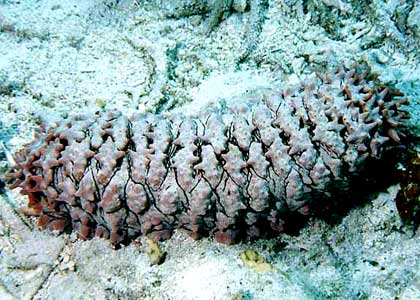
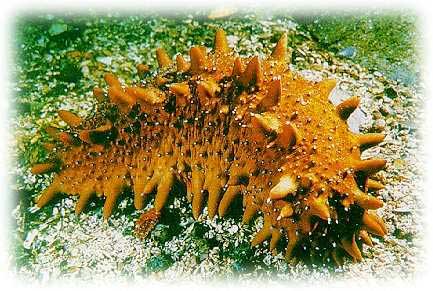
Sea Cucumber for Arthritis
Sea Cucumber for Arthritis.
By Subhuti Dharmananda, Ph.D., Director, Institute for Traditional Medicine, Portland, Oregon
PREPARATION AND USE OF SEA CUCUMBER
To prepare the sea cucumber after it is collected, the internal organs are removed, and dirt and sand are washed out of the cavity. It is then boiled in salty water and dried in the air to preserve it. When readied for use in making food, the hard, dried sea cucumber is softened. The process is quite lengthy, which is why this food tends to appear at special dinners and banquets more so than in day-to-day cuisine. To soften the dried sea cucumbers, the instructions are: place the sea cucumbers in a pot and add cold water to cover; soak for at least 12 hours; then cook over low heat for 1 to 2 hours; add more water, as necessary, to make sure that the water always covers the cucumbers; remove from heat and let cool to room temperature, then drain.
From the nutritional viewpoint, sea cucumber is an ideal tonic food. It is higher in protein (at 55%) than most any other food except egg whites (at 99%) and it has 10-16% mucopolysaccharides, substances that are used to build the cartilage. Sea cucumber is lower in fat than most other foods.
SEA CUCUMBER AS A NUTRITIONAL SUPPLEMENT
From the modern medical viewpoint, sea cucumber is a valuable source of several kinds of substances that can serve as natural health products, and, perhaps, be developed as drugs. Since sea cucumber is consumed as a food by a very small segment of the population outside East Asia, most people do not have access to its beneficial components. Thus, extracts of desired sea cucumber materials are put into easy-to-consume formats, such as capsules (hard and soft gelatin) and tablets.
Sea cucumber, having a cartilagenous body, serves as a rich source of mucopolysaccharides, mainly chondroitin sulfate, which is well-known for its ability to reduce arthritis pain, especially that of osteoarthritis As little as 3 grams per day of the dried sea cucumber has been helpful in significantly reducing arthralgia. Chondroitin's action is similar to that of glucosamine sulfate, the main building block of chondroitin.
The chemical layout of chondroitin A 3D representation of the building block of chondroitin
Chondroitin building blocks; left is the chemical layout, showing one building block that can be repeated numerous times; this is basically a glucose molecule (left potion) and glucosamine molecule (right portion), which has been sulfated (O3S, at the top). This building block is illustrated to the right in a three-dimensional representation.


Source: http://www.itmonline.org/arts/seacucumber.htm
By Subhuti Dharmananda, Ph.D., Director, Institute for Traditional Medicine, Portland, Oregon
PREPARATION AND USE OF SEA CUCUMBER
To prepare the sea cucumber after it is collected, the internal organs are removed, and dirt and sand are washed out of the cavity. It is then boiled in salty water and dried in the air to preserve it. When readied for use in making food, the hard, dried sea cucumber is softened. The process is quite lengthy, which is why this food tends to appear at special dinners and banquets more so than in day-to-day cuisine. To soften the dried sea cucumbers, the instructions are: place the sea cucumbers in a pot and add cold water to cover; soak for at least 12 hours; then cook over low heat for 1 to 2 hours; add more water, as necessary, to make sure that the water always covers the cucumbers; remove from heat and let cool to room temperature, then drain.
From the nutritional viewpoint, sea cucumber is an ideal tonic food. It is higher in protein (at 55%) than most any other food except egg whites (at 99%) and it has 10-16% mucopolysaccharides, substances that are used to build the cartilage. Sea cucumber is lower in fat than most other foods.
SEA CUCUMBER AS A NUTRITIONAL SUPPLEMENT
From the modern medical viewpoint, sea cucumber is a valuable source of several kinds of substances that can serve as natural health products, and, perhaps, be developed as drugs. Since sea cucumber is consumed as a food by a very small segment of the population outside East Asia, most people do not have access to its beneficial components. Thus, extracts of desired sea cucumber materials are put into easy-to-consume formats, such as capsules (hard and soft gelatin) and tablets.
Sea cucumber, having a cartilagenous body, serves as a rich source of mucopolysaccharides, mainly chondroitin sulfate, which is well-known for its ability to reduce arthritis pain, especially that of osteoarthritis As little as 3 grams per day of the dried sea cucumber has been helpful in significantly reducing arthralgia. Chondroitin's action is similar to that of glucosamine sulfate, the main building block of chondroitin.
The chemical layout of chondroitin A 3D representation of the building block of chondroitin
Chondroitin building blocks; left is the chemical layout, showing one building block that can be repeated numerous times; this is basically a glucose molecule (left potion) and glucosamine molecule (right portion), which has been sulfated (O3S, at the top). This building block is illustrated to the right in a three-dimensional representation.

Source: http://www.itmonline.org/arts/seacucumber.htm

